
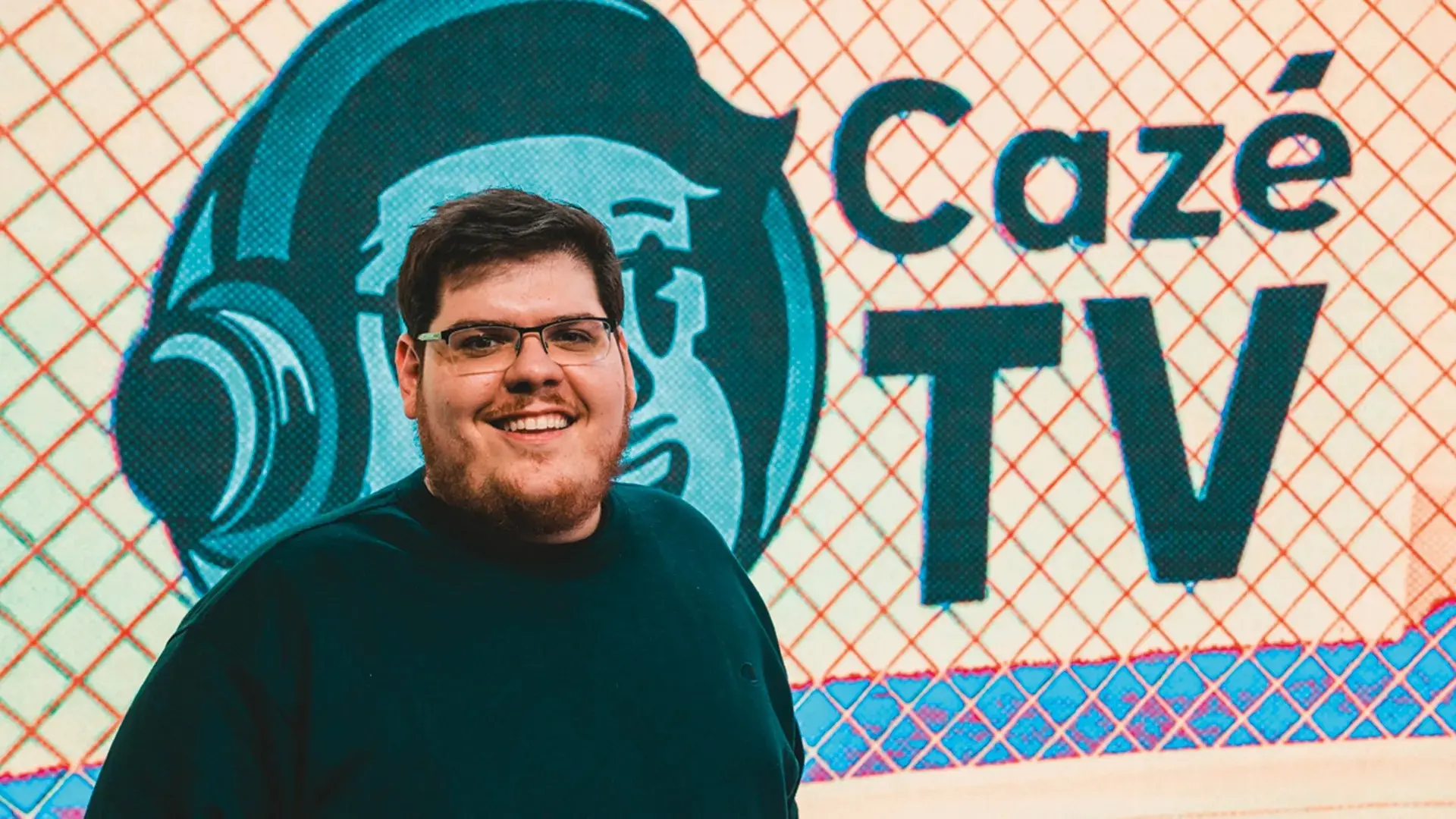
The revolution that is watching the World Cup on YouTube, with Casimiro's irreverence and the quality of a TV broadcast may be numbered. A real corporate web and an alleged backstage conflict of interest lit up a red alert.
FIFA is keeping an eye on the negotiations and can surprisingly prevent CazeTV to transmit 2030 World Cup, which will happen in Spain, Portugal and Morocco. But why does the maximum football entity want to stop the biggest digital sports phenomenon in Brazil? The answer involves a lot of money and strict market rules.
Where the problem lives: Conflict of interest
The tension began to leak behind the scenes during the last Copa América, played in the United States. The center of the controversy is not the Casimiro itself, but the gear that makes the channel work. FIFA is looking closely at the role of LiveModeCazéTV's company.
The problem for FIFA is that LiveMode is wearing several hats at the same time in the Brazilian sports market. To understand the confusion, we need to look at the actors involved:
- The Display: CazéTV, which broadcasts the games to the public.
- The Dealer: LiveMode, an exclusive agency that buys and sells broadcast rights.
- The Product: The Strong Union League (FFU), a group that represents teams like Corinthians, Fluminense, International and Vasco.
- The Financers: Financial market giants such as XP Investments and General Atlantic.
The web of R$ 2.6 Billions
FIFA alert went off on behalf of common investors. In 2023, a consortium led by XP Investments and General Atlantic bought 20% of the commercial rights of FFU clubs for 50 years, in an astronomical business of about R$ 2.6 billion.
The crucial detail? LiveMode played a central role in creating FFU. And to further complicate FIFA's scenario in 2024, XP and General Atlantic have also become investors of LiveMode itself..
In the vision of the entity that runs world football, this relationship creates an ethical and commercial short circuit: the same companies and investment funds that sell the rights (via FFU/LiveMode) are the ones that display them (CazéTV). The line between "who sells," "who buys" and "who displays" became invisible.
FIFA ultimatum: Choose a side
FIFA is strict about transparency and the separation of roles to ensure fair competition in the sale of its events. According to reports from sources close to the case, the entity can take drastic measures for the 2030 Cup.
Among the possible scenarios that are being studied are:
- Single paper requirement: LiveMode would have to choose whether to be just the buyer/trader of rights or just the showgirl (CazéTV), giving up one of its business fronts.
- Removal from investors: FIFA may condition the release of the Copa's transmission rights outside XP and General Atlantic from the company's corporate board.
What does that mean for the fan?
The agreement made for the 2022 and 2026 World Cup between FIFA and CazéTV broke a historical monopoly, proving that digital streaming without exclusivity is the future (and the present) of big broadcasts. The channel led by Casimiro Miguel, Edgar Diniz and Sérgio Lopes reformulated the way the Brazilian consumes football.
However, the accelerated growth and billionaire partnerships of LiveMode stumbled upon the rules of the game International. If an agreement is not designed to clearly separate who sells and who transmits the rights, the Brazilian fan may have to look for another screen to root for hexa in 2030. It remains to be seen whether the Brazilian market will yield to the demands or whether we will find a legal maneuver to keep the channel in the air for the next biggest event on the planet.